After the fighting – occupational duties & demobilsation, consigned to history.
ABOVE : The cover of ‘The service of Thanksgiving 2nd Army Group”. On 29th April 1945 181 field regiment crossed the River Elbe, the last major river obstacle, once again the first field artillery to cross, they were still being bombed and strafed by jet propelled ME 262’s, and by 1st May they were back in action at Gulzow. Sgt Mottram said the morale of the regiment was boosted 100% as they watched 5 Luftwaffe planes being shot down by the guns of 199 Light anti-aircraft regt. All three batteries of 181 field regiment were still in constant demand. The first hint of surrender talks was recorded in the war diary on 2 May, and on the 4th of May after a final action by 178 battery in Vorburg, the order to ‘cease fire’ was given, and the 8th May was victory in Europe day (VE).
The threat of being killed or bombed was now over, suddenly the men who had been used to performing daily routines and had been constantly occupied with the business of war, and survival were suddenly occupied with the business of peace. It’s not hard to imagine the chaos they had to deal with- the local population were to be given no consideration when it came to billets for the men, they simply had to make room or ship out, an attitude not easy for the generally good natured ‘British Tommy’.
The Regiment was responsible for an area of some 220 square mile of the Kreis Lauenberg area, there were thousands of displaced persons moving through, many of them slave labourers or prisoners of war trying to find their way back home. There was no sympathy for the shortages endured by the local population, and the local mayor got short shrift when he went to complain that his bicycle had been stolen by a ‘Tommy’. Processing thousands of German prisoners was also a full-time job in the early days of occupation.
Keeping the men occupied was a constant challenge, football was very much in evidence and matches between different units and even local German teams were organised, boxing tournaments, and athletic meetings were also very much in evidence. Local skill shops were also run, woodwork, art, craft, etc. Lt. Rod Gow was a keen amateur photographer – and ran a photography workshop and many of the photographs he took eventually found their way to me via various contacts, imagine his surprise when he found my website.
In June the first of the guns were to be handed back to Ordnance having done great work, this was a big moment for the ‘Shopshire gunners’. Each gun crew always had the same gun in battle, as time went on there would be normal wear and tear creating the need for small adjustments, each gun had its own character and foibles that would be recognised by its crew. Also, for the artillery man the guns are his ‘colours’ so handing them in would have been a significant moment.
The first departures from the Regiment occurred in August 1945, there was still a war going on in Asia and some of the younger, single officers were posted to Southeast Asia Command (SEAC) Lt Philip Mulholland received a telegram from a former officer now serving in India requesting his presence. Looking forward to returning home to a relaxing break Philip had no wish to fight the Japanese thank you! Fortunately for him during the proceedings the Americans dropped the A-bomb. Many men were also posted to ‘Pickfords’, Charlie Spence was sent to a clearing camp in Deolali, India. He was greeted by the Depot Sgt. Major “what unit you from gunner?”- “15th Scottish sar’nt major”, replied Charlie proudly, “Never heard of ‘em”, my blood boiled, said Charlie!
As the months passed more men were being re-posted to other units, the older married men demobbed to return to their civilian life, many of them slow or never to recover from the stress and mental scars left by what they had seen and done. My Dad returned home in February 1946 and was released from army reserve in March 1946 – not so early!
The final entry in the Regiment’s war diary records that “On January 23, 1946, everyone departed with the exception of the Adjutant and 4 other ranks who left the day after, when the regiment finally ceased to exist, and so ended the existence of 181 field regiment, converted from the 6th Battalion K.S.L.I in March 1942. The first field regiment across the Seine in August 1945, the Rhine in March 1945 and the Elbe in April 1945.
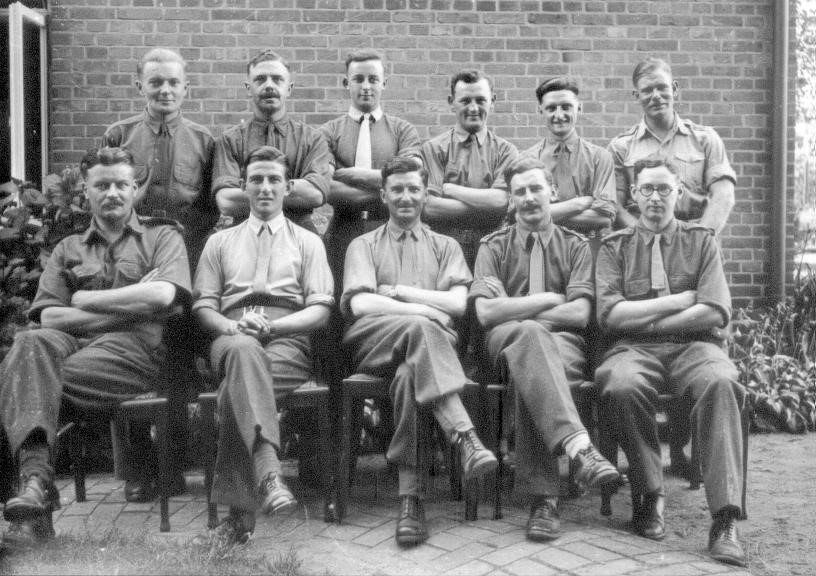
Rear L-R; 2Lt Rwiatowski; Lt.R Foulds; Lt.A McLeod; Lt. Mitchel; Lt,R Gow; Lt.ACMP Ducquenoy; Front L/R; Capt. J Meredith MC; Capt Sharpe; Maj Grahame MC; Capt ADG Shaw DSO; Lt.D Trewby. Officers Mess, Breitefelde.
Poor Major Sharpe survived the fighting only to die of ‘Infantile paralysis’ in October 1945, just a couple of weeks before he was due to leave for the UK. The whole Battery was shocked and saddened.
For The Royal Artillery the guns are their ‘Colours’ and it must have been a day of mixed feelings when they were finally handed into Ordnance for the last time.
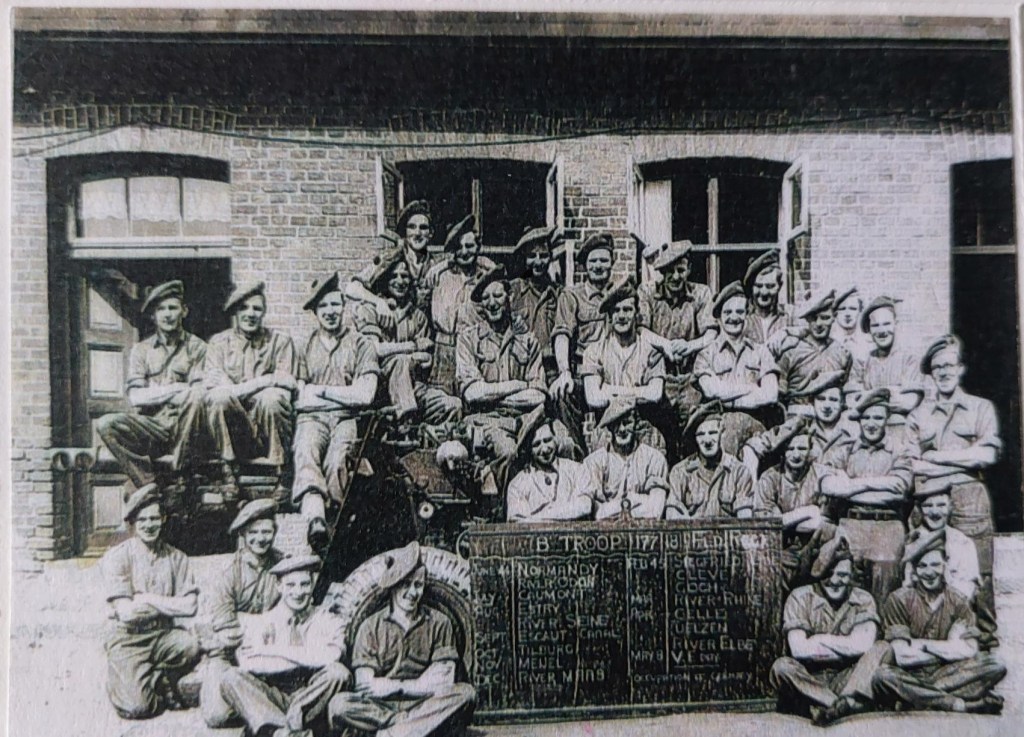
Rear rank L-R, Gnr.Johan:L/bdr Warmington: Bdr Green: BSM Clacker: Gnr.Broadhead: Gnr.Hickman: Lt.Hewitt.
2nd rank L-R, Gnr.Dock: Sgt.Bull: Gnr.Wilson: Bdr.Onions: Gnr.Stokes: Gnr.Dommock: Gnr Beddow: L/Bdr Milner: Bdr.Bugler.
3rd rank L-R, Gnr.Roberts: Gnr.Bordwell: Gnr.Tweedle: Bdr.Hamilton: Gnr.Fitzmaurice: Gnr.Kensey: Gnr.Baker: Lt.Wright.
Front rank, Bdr.Crouch: Gnr.Berwick: Capt.Stokes: Gnr.Jennings: Gnr.Turney: L/Bdr Houlgrave.
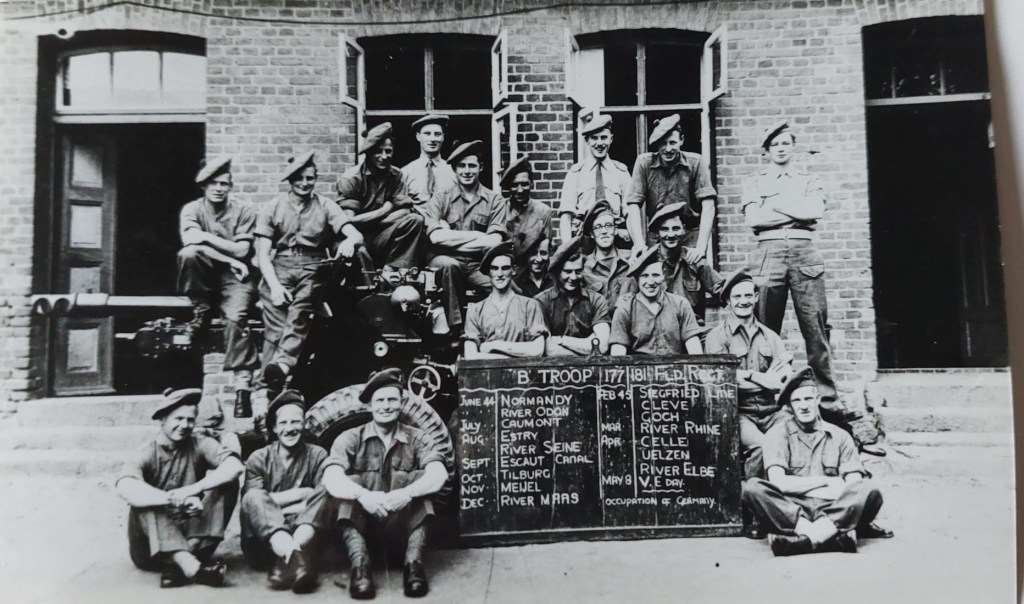
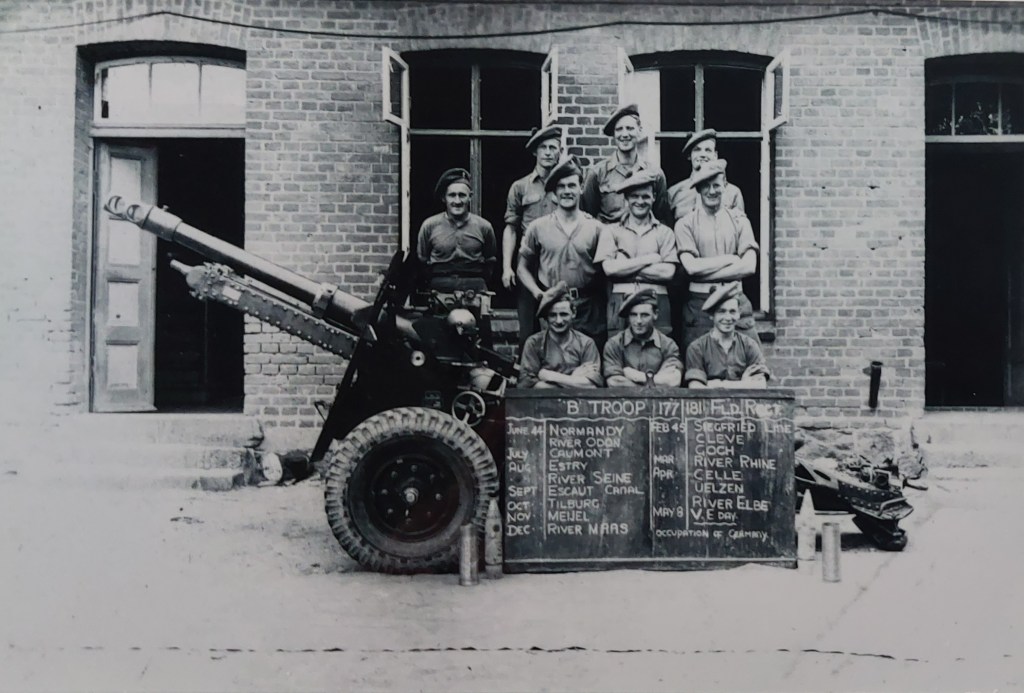
A Gun Crew from B Troop hand in their 25 pounder to ordnance at the cessation of hostilities, this was a ritual with all the gun crews. The board is chalked up with the Regiments engagements during the fighting and tracks their route across Europe.
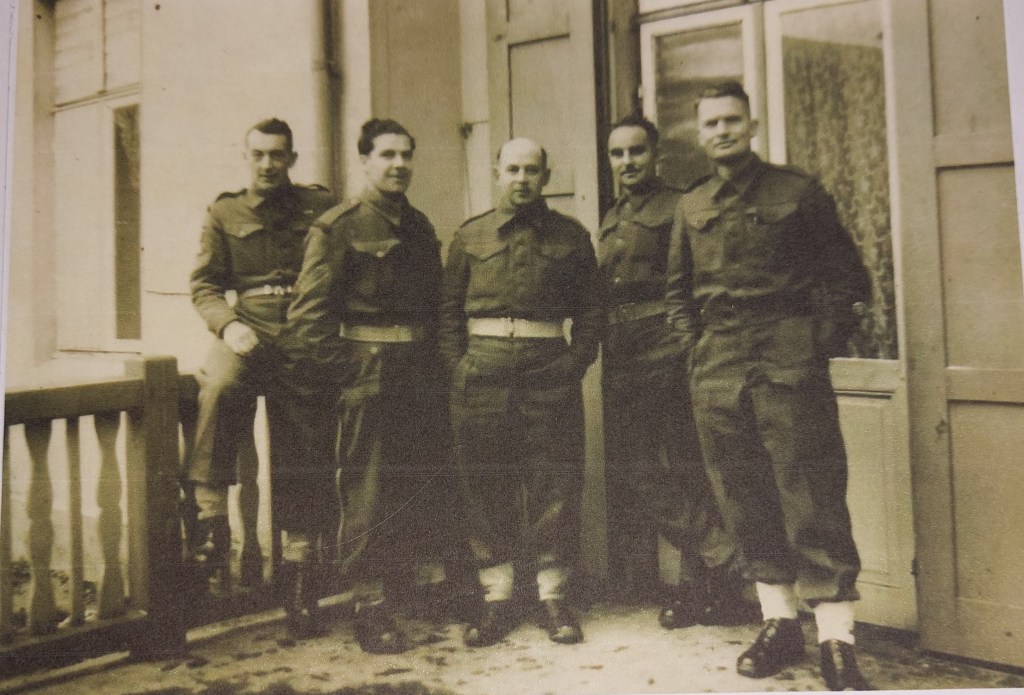
L-R; Sgt’s Shelley; Llyns, Holliday; Cowern; BSM Clacker
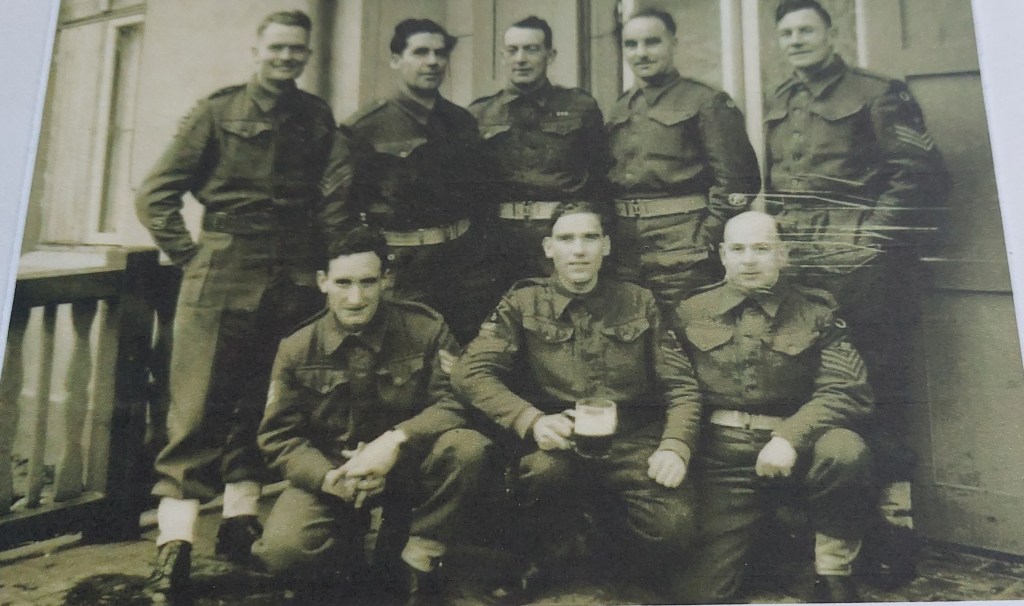
Sgt’s 177 Bty, relaxing. Rear L-R BSM Clacker; Sgt’s Llyns; Horace Shelley; George Cowern; U/K. Front L-R Sgt’s Jack Forder; U/K; George Halliday.
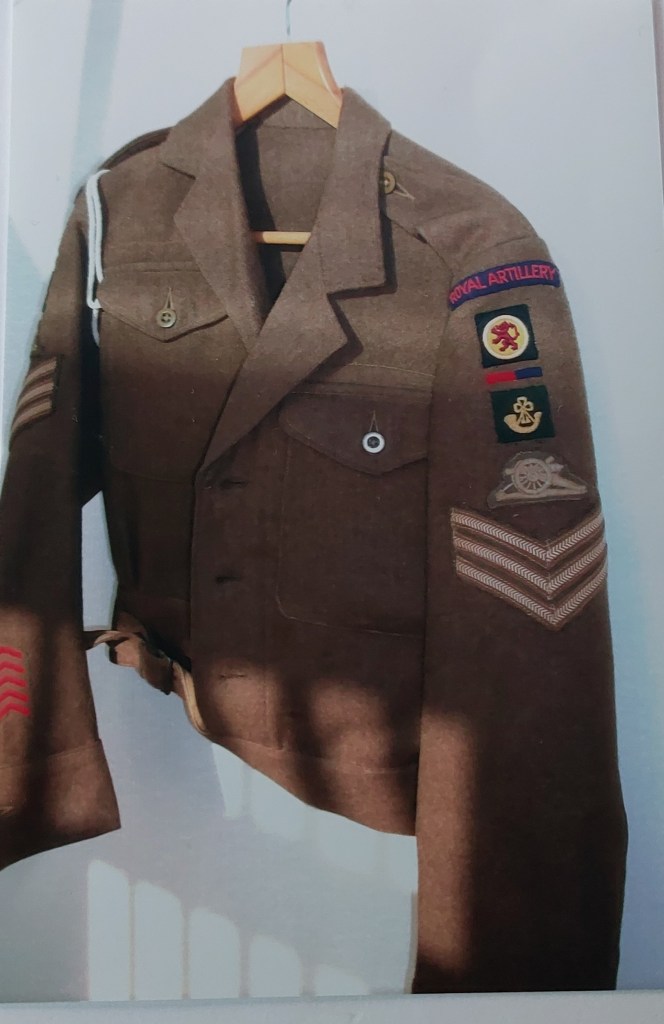
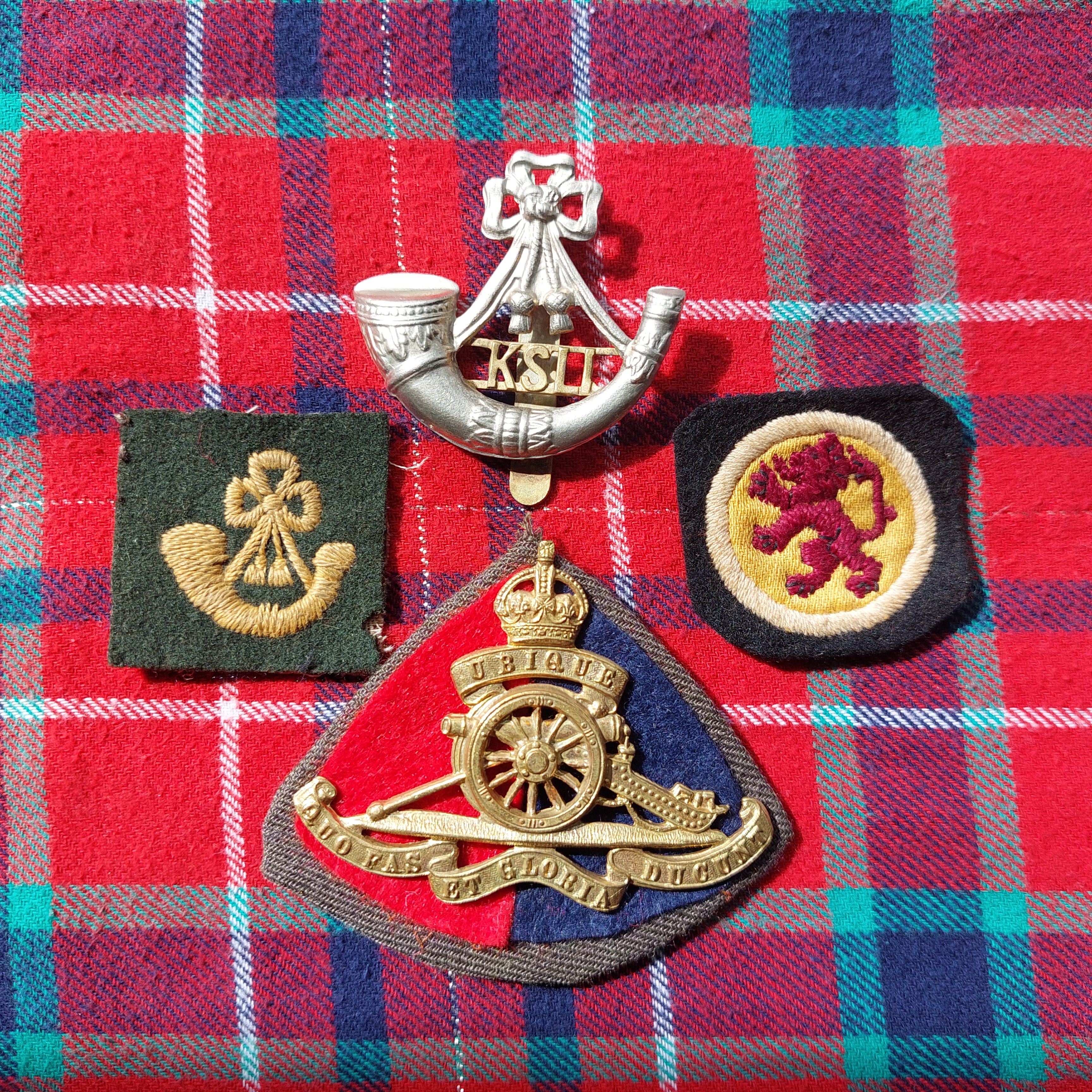
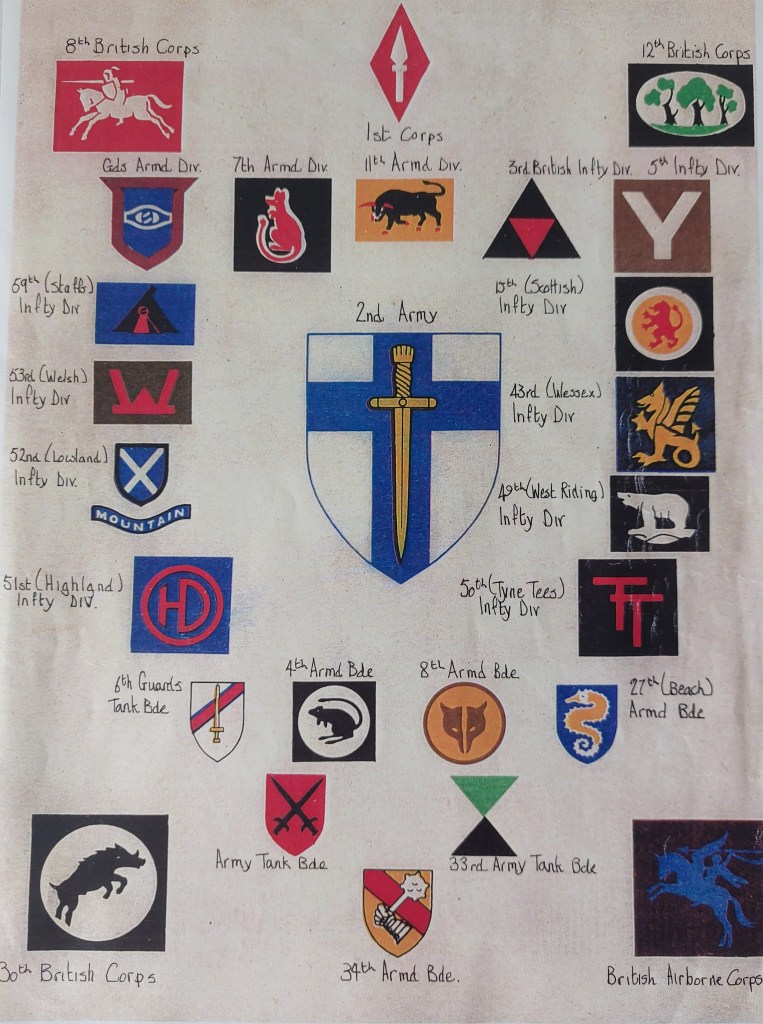
From top to bottom; The Royal Artillery shoulder title; The rampant lion of 15th Scottish Division; The Royal Artillery ‘arm of service ‘strip; The unique regimental Gold Bugle Badge; The insignia of a Royal Artillery Sergeant, The sergeant’s chevrons (stripes). All replicated on the right sleeve, plus The Royal Artillery lanyard; The five red inverted chevrons above the cuff – one for each year served abroad. This is the actual battle dress jacketworn by Sgt. George Cowern after the fighting.
Officers Reunion
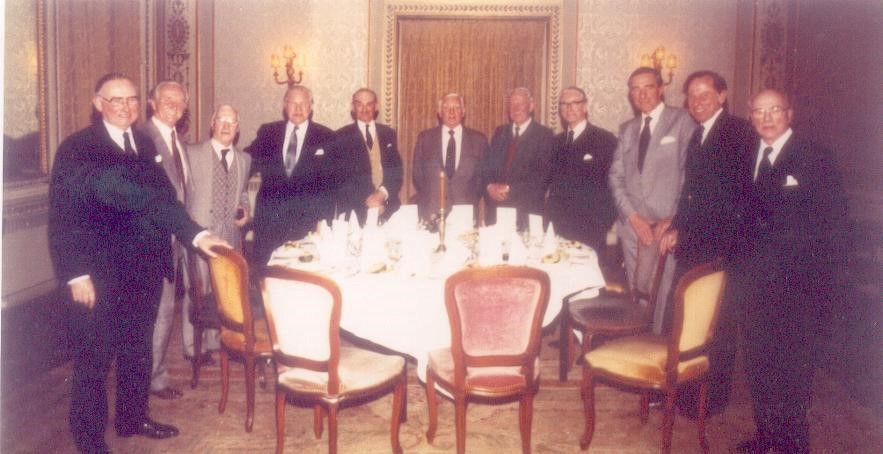
L/R (Capt.) David Trewby; (Capt.) Tom Stokes; (Capt.) Philip Thomlinson; (Lt/Col) Dick Bethell; (Lt) Moss Walters; (Capt.) John Shaw; (Capt.) Bill Mathews; (Maj) Jack Cunis (Capt.) Philip Mulholland; (Lt.) David Small.
For many years after the War the Officers held an occasional Reunion, these were organised by David Trewby and held at the Hurlingham Club where he was Secretary. This was the last one 1983.
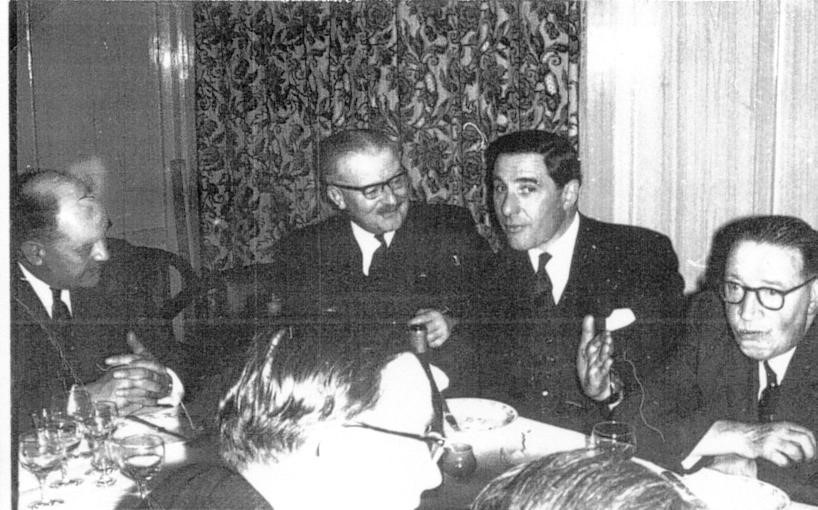
At the rear; (Lt/Col) Dick Bethell DSO; (Maj) John Meredith MC; (Maj) Jack Cunis MC; U/K
War Graves
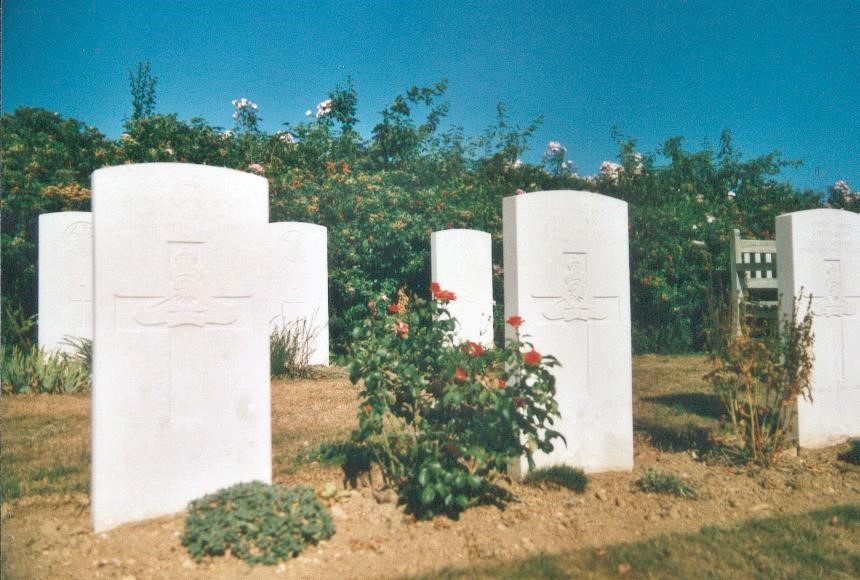
Died together, buried together. Sgt Arthur Gunn, Gnr’s Ralph McMorland and Stan Wheaton lie in peace at Brouay War Cemetery.
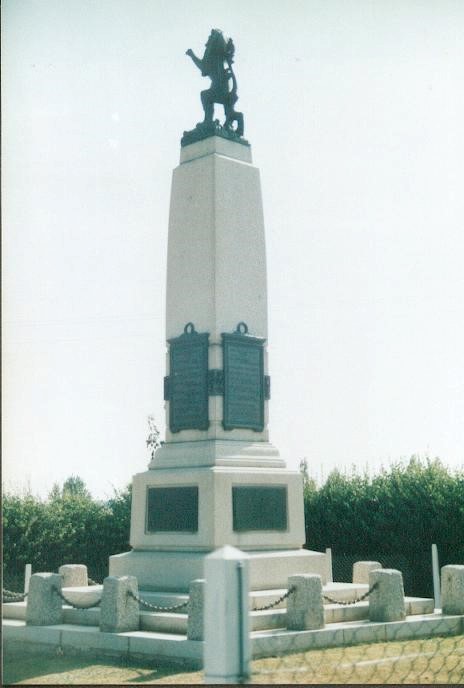
The Monument erected in honour of the 15th Scottish Division, at Tourville. The Plaques around the bottom are dedicated to each of the four Brigades including HQ Brigade.
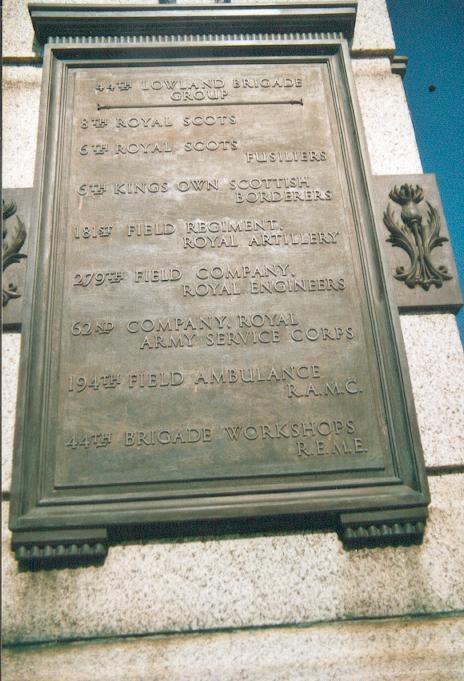
The plaque dedicated to 44 Brigade which includes 181 Field Regt RA. my father’s regiment.
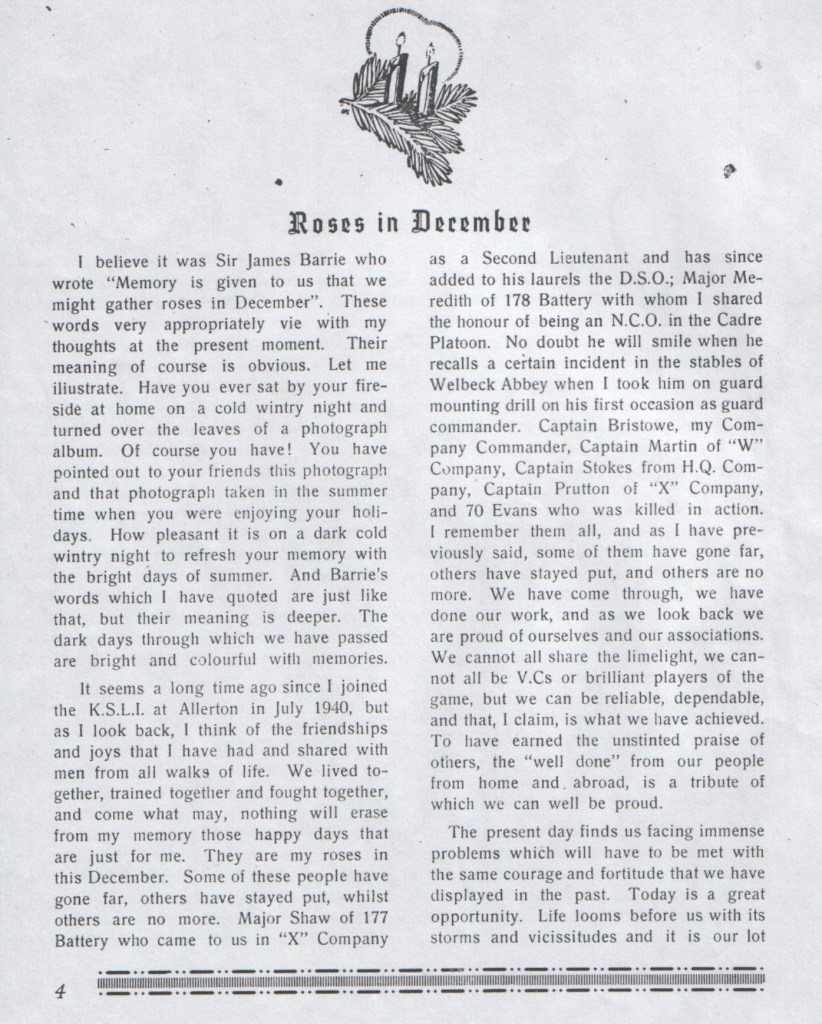
These sentimental words were written by a soldier after the War. The page was published in a Christmas edition of the Regimental Magazine in 1945. Sadly the page with the authors name was missing. He was obviously reflecting on the War and all the memories that he had gathered and shared with his old comrades. It’s amazing how much information a researcher can glean from short articles such as this. There is photograph of the Cadre Platoon on page 12 of ‘Guns and Bugles’, so the author must be amongst them.
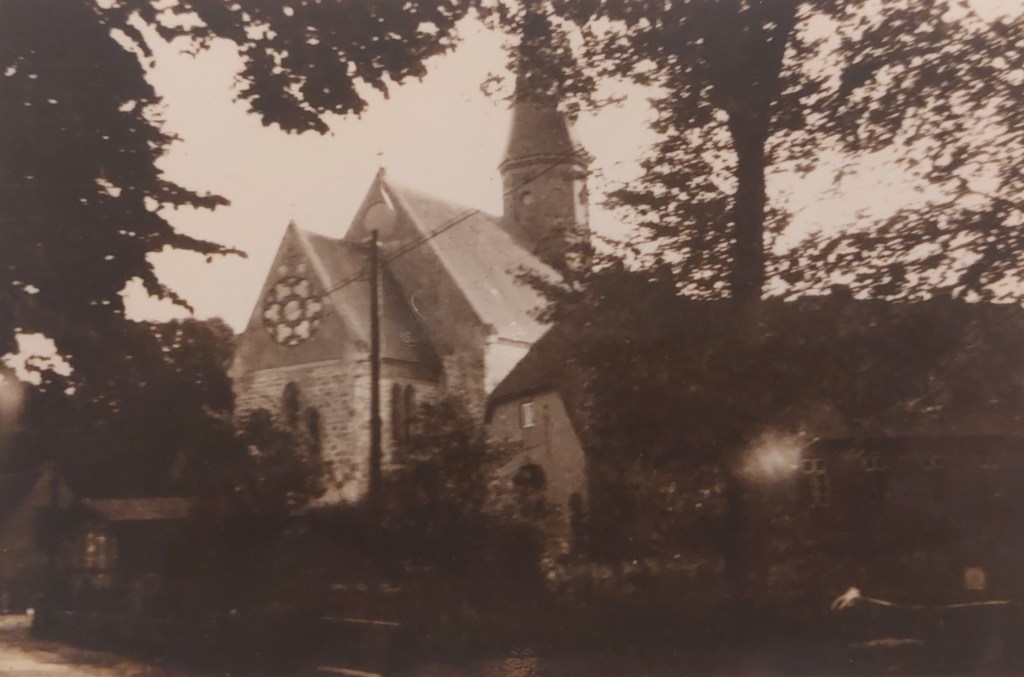
Possibly the church at Schwerin.
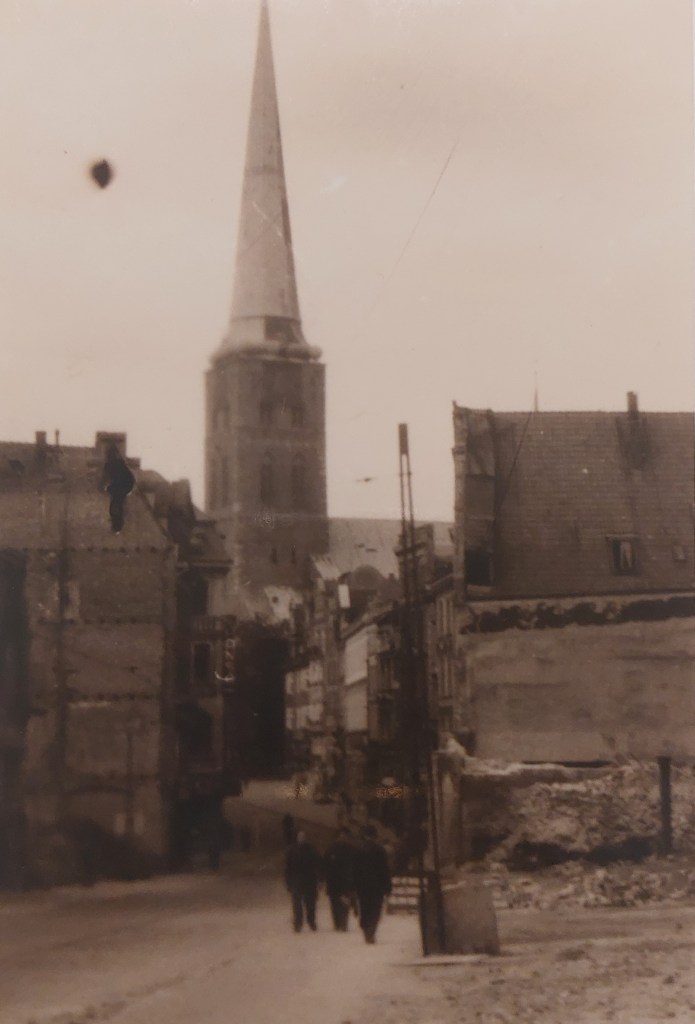
Church at Brietenfelde.
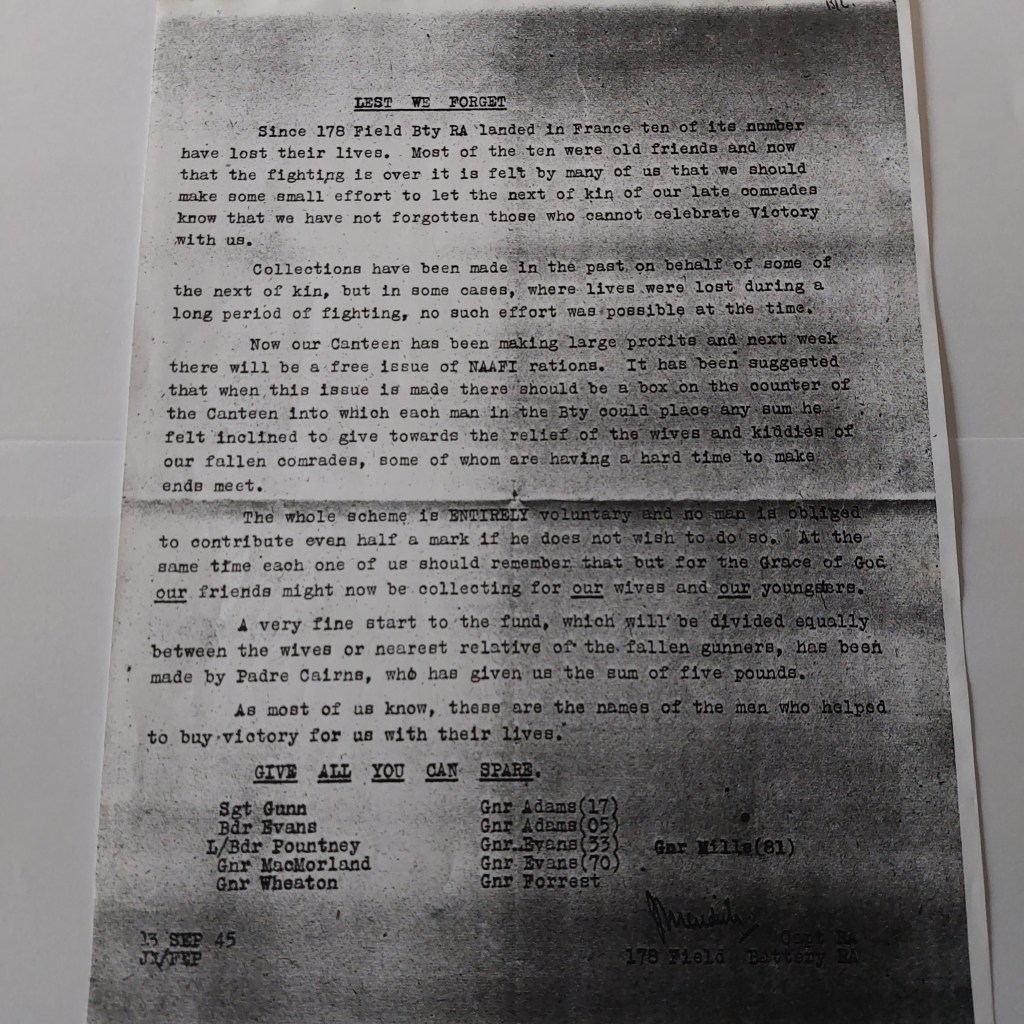
LEST WE FORGET – “Since 178 Field Bty RA landed in France ten of its number have lost their lives. Most of the ten were old friends and now that the fighting is over it is felt by many of us that we should make some small effort to let the next of kin of our late comrades know that we have not forgotten those who cannot celebrate Victory with us. Collections have been made in the past on behalf of some of the next of kin, but in some cases, where lives were lost during a long period of fighting, no such effort was possible at the time. Now our Canteen has been making large profits and next week there will be a free issue of NAAFI rations. It has been suggested that when this issue is made there should be a box on the counter of the Canteen into which each man in the Bty could place any sum he is felt inclined to give towards the relief of the wives and kiddies of our fallen comrades, some of whom are having a hard time to make ends meet. The whole scheme is ENTIRELY voluntary and no man is obliged to contribute even half a mark if he does not wish to do so. At the same time each one of us should remember that but for the Grace of God our friends might now be collecting for our wives and our youngsters. A very fine start to the fund, which will be divided equally between the wives or nearest relative of the fallen gunners, has been made by Padre Cairns, who has given us the sum of five pounds. As most of us know, these are the names of the men who helped to buy victory for us with their lives. GIVE ALL YOU CAN SPARE. Sgt Gunn, Bdr Evans, L/Brd Pountney, Gnr MacMorland, Gnr Wheaton, Gnr Adams (17), Gnr Adams (05), Gnr Evans (33), Gnr Forrest, Gnr Mills (81).
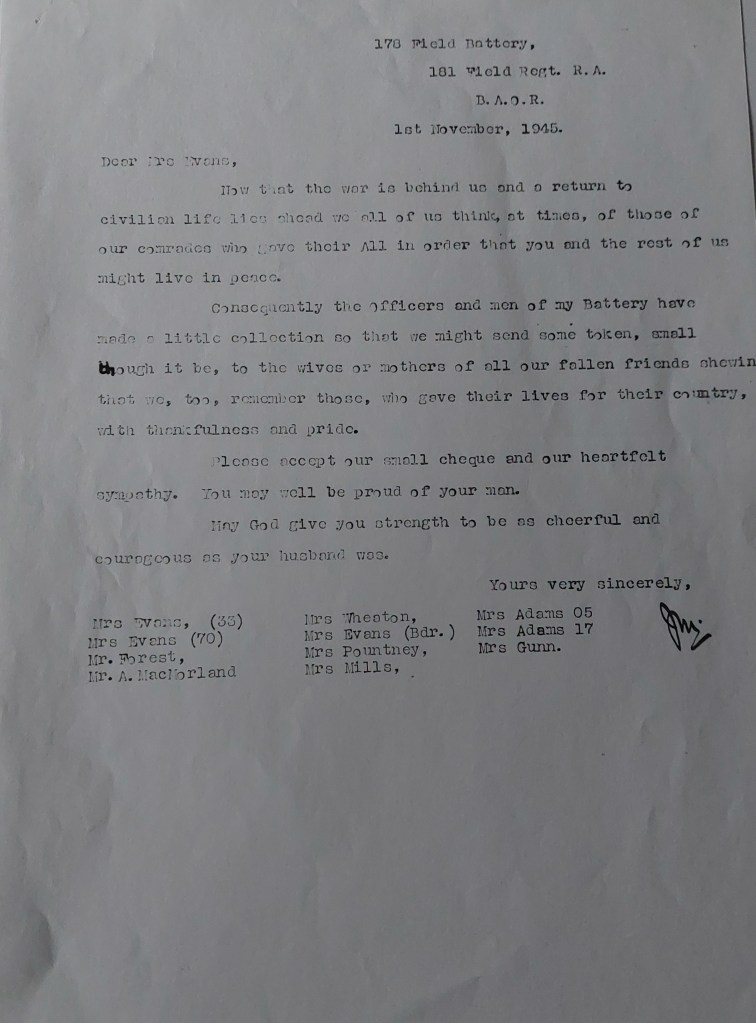
These two nice letters written by Capt. Meredith after the war illustrates why his men had so much respect for him , each one of the bereaved would have received a similar letter, and a small donation.
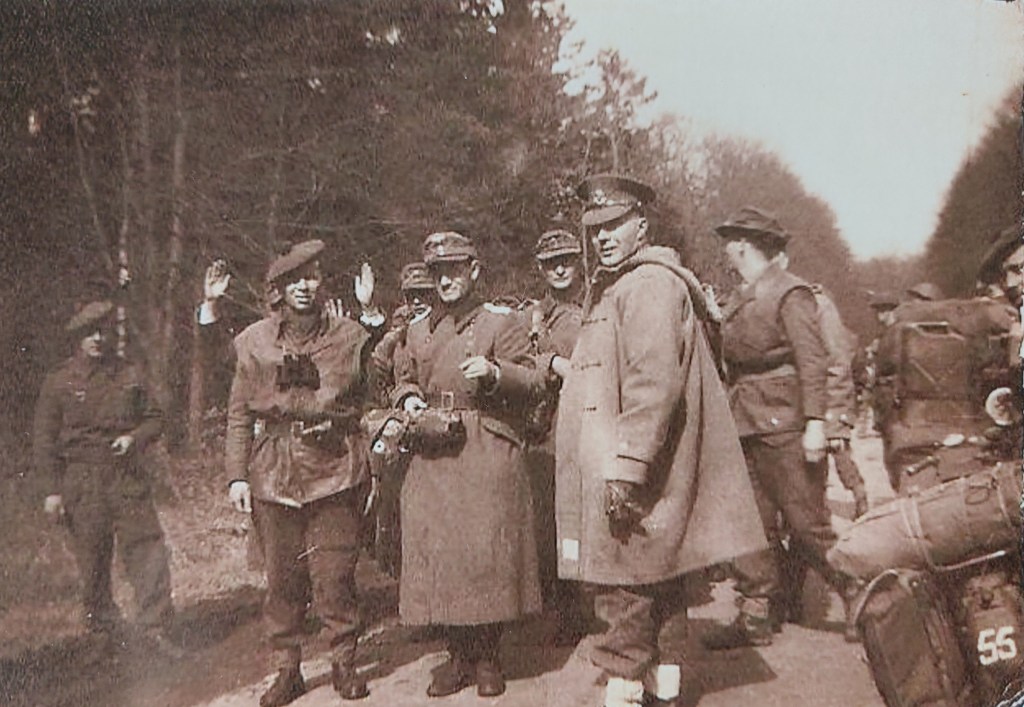
Military Police office takes charge of German prisoners for processing. Note the sign of ‘The Rampant Lion’ on the right
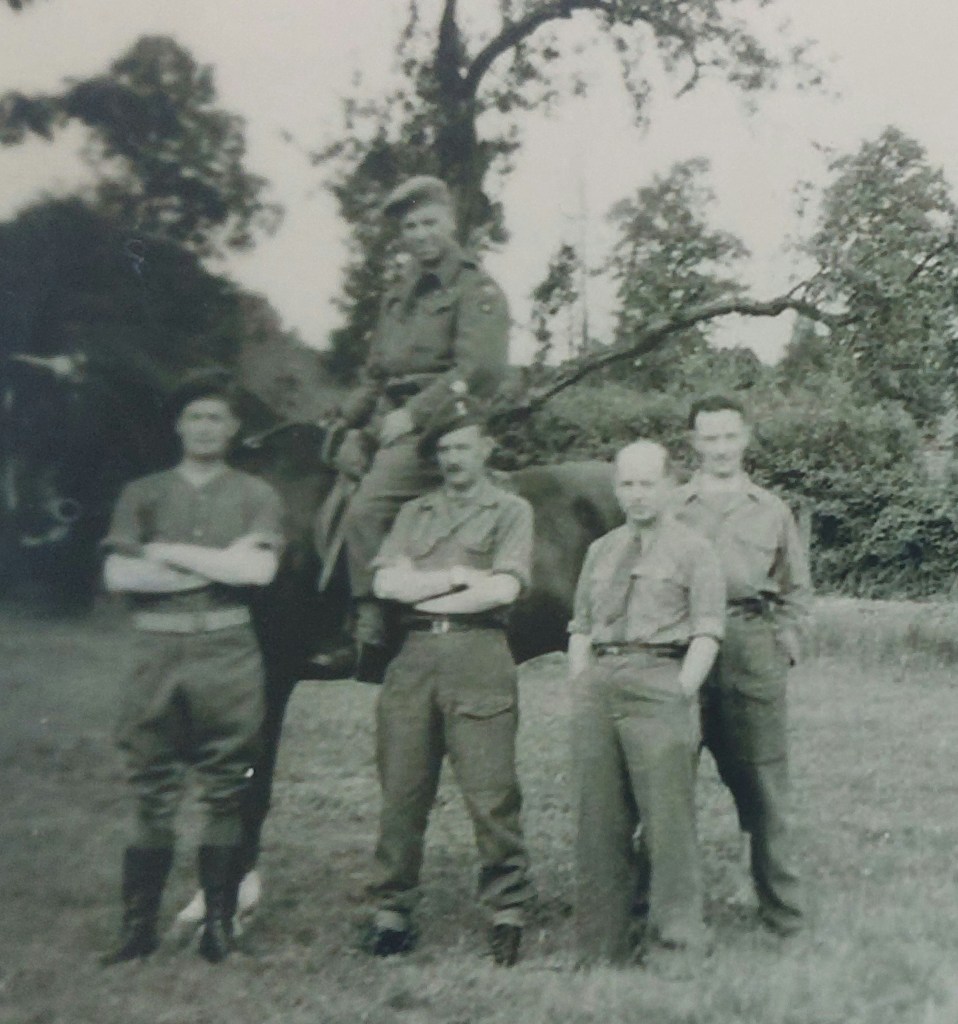
Mounted: B.S.M Wright
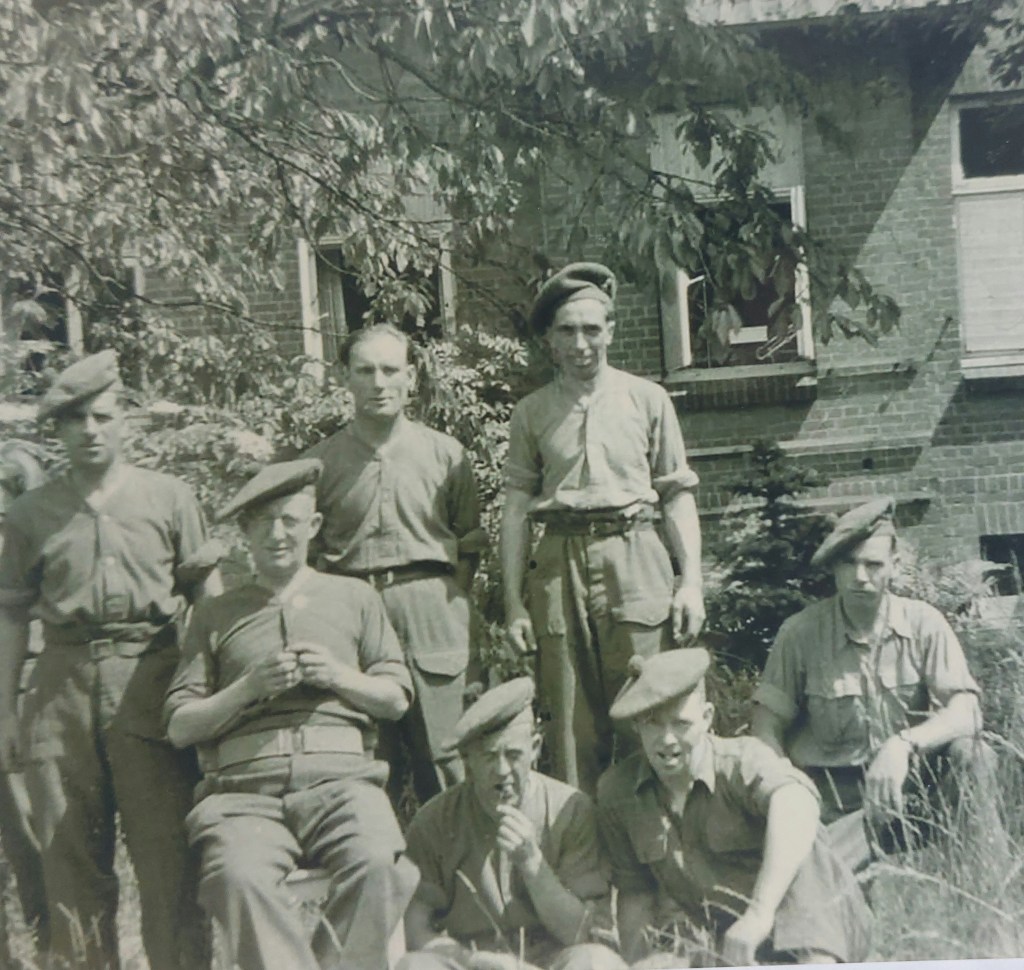
Rear: MacKay, Easthorpe, Fawcett
 Guns and Bugles